Featured · Enterprise Software
The Generational Shift in Software
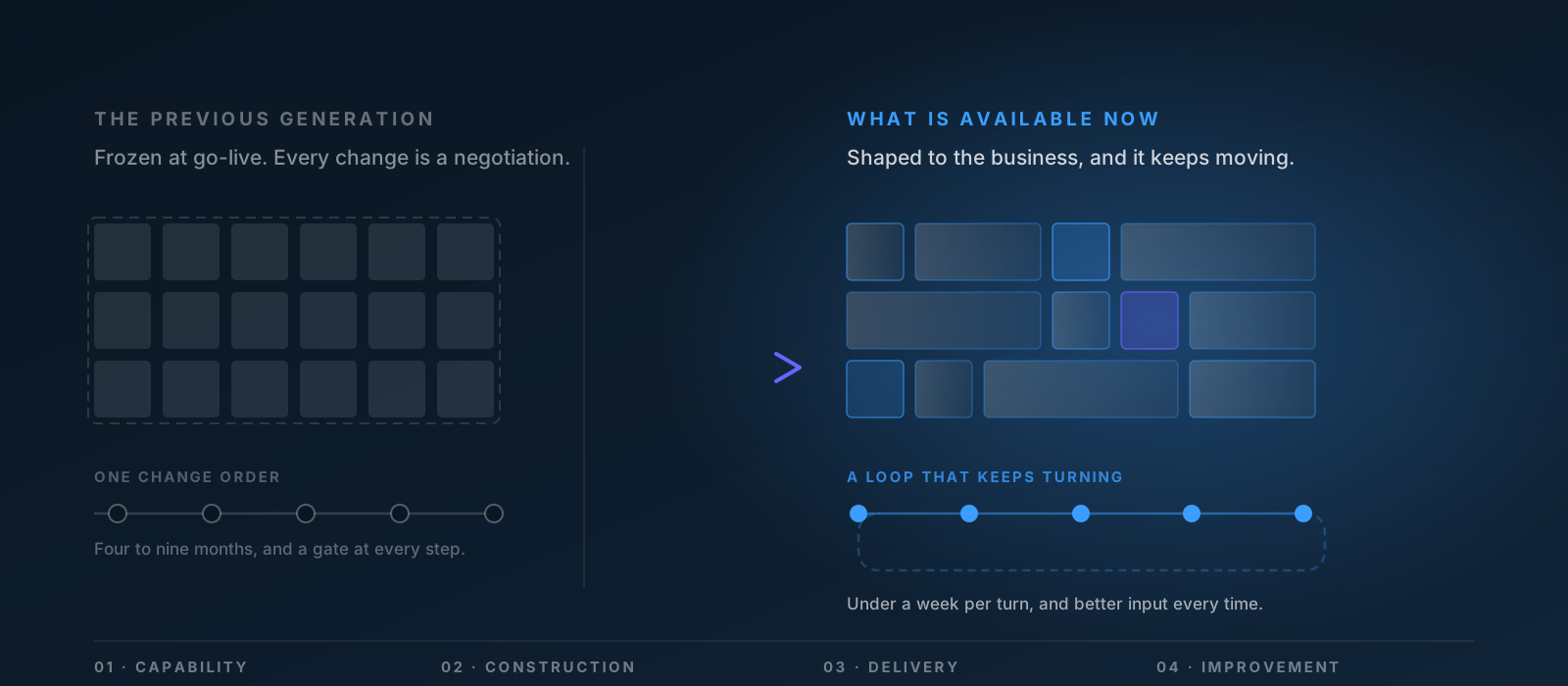
What AI changed, what it takes to run it responsibly in production, and how buying software works now that a system can be shaped to a business in days rather than quarters.
Long-form writing on AI infrastructure, AI in the public sector, agent evaluation, data security, internal tooling, and how we run Autessa on Autessa.
What AI changed, what it takes to run it responsibly in production, and how buying software works now that a system can be shaped to a business in days rather than quarters.
AI policy, public records, and governance for state and local agencies.
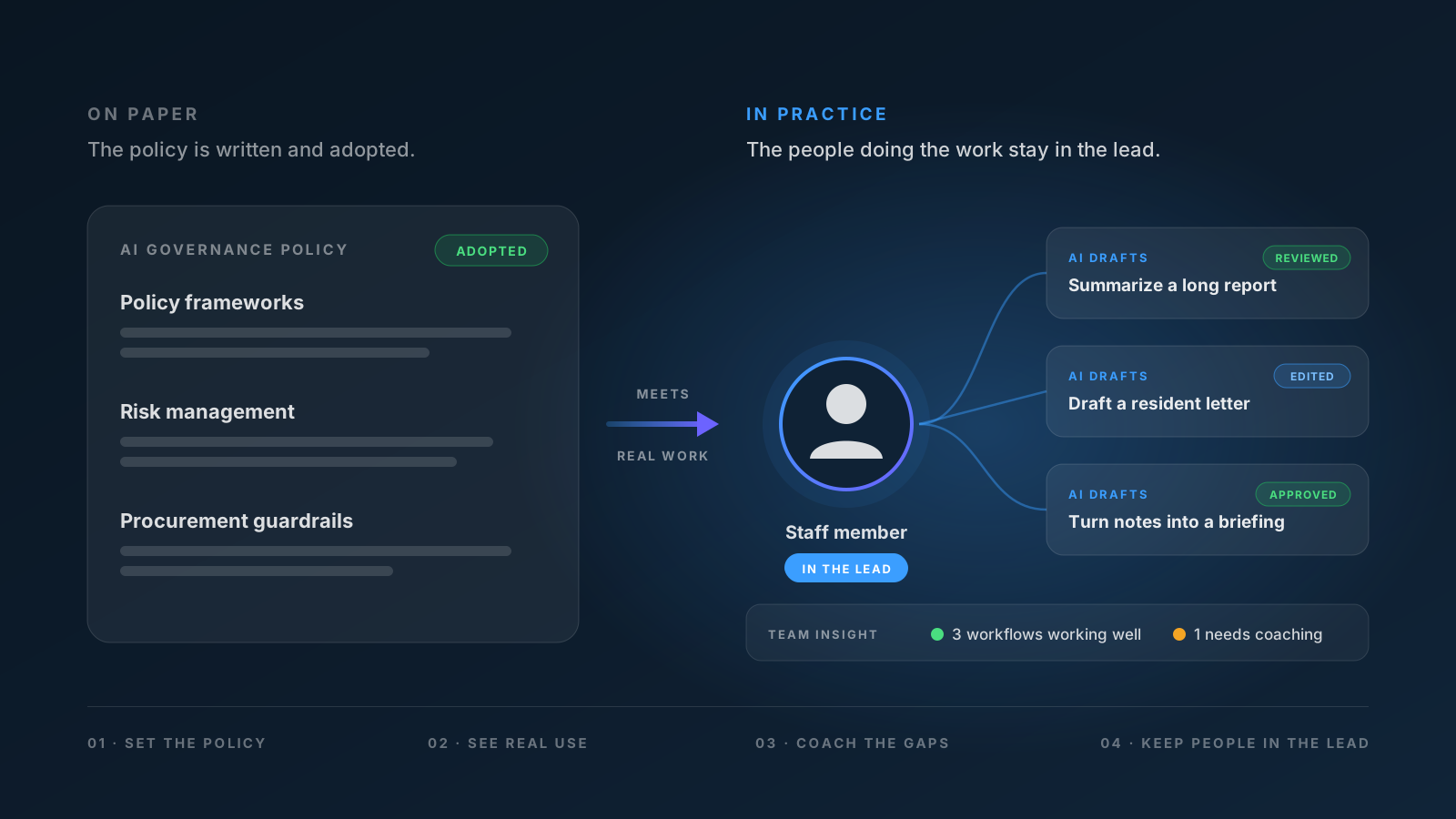
At the Washington IT Leadership Forum, the most important conversation about AI governance did not happen during the formal session. It happened over lunch — and it was about people, not policy.
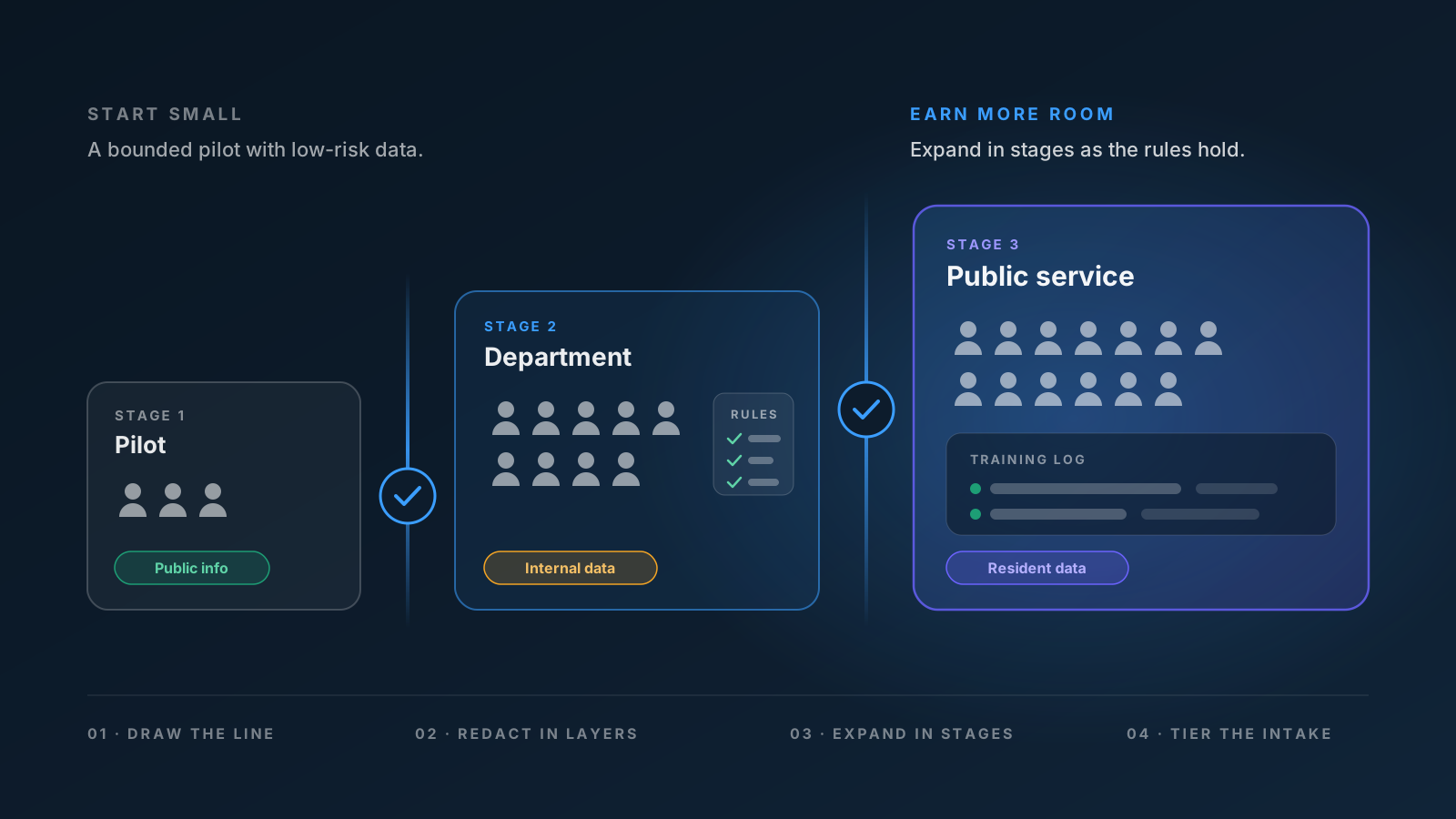
Experimentation is how agencies find the AI uses that help residents. Safe experimentation is what lets those uses survive a records request, an audit, or a front-page story.
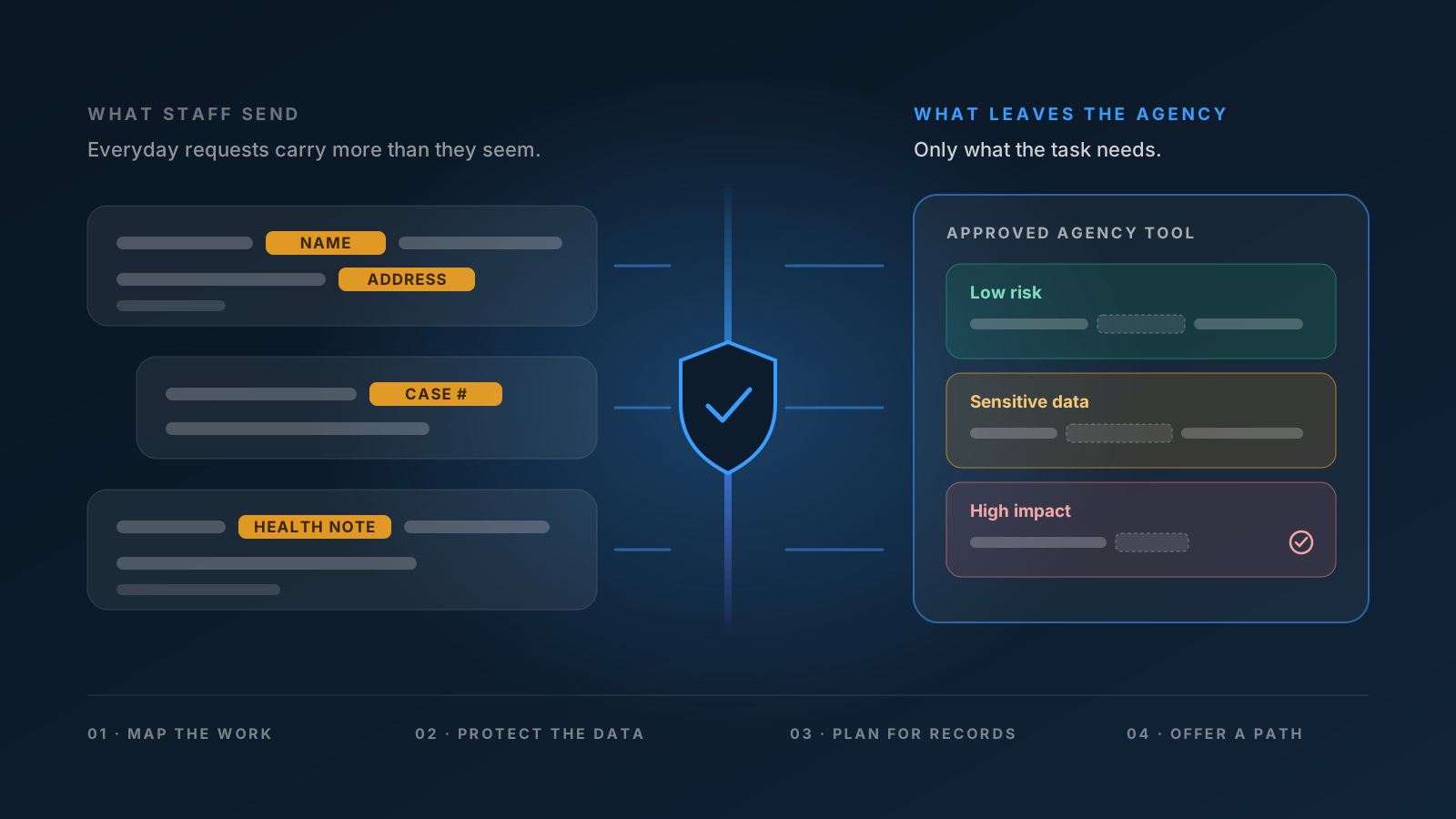
A workable AI policy starts with the work employees already do. Map the data, protect it before it leaves the agency, plan for public records, and give staff a sanctioned tool they will actually use.
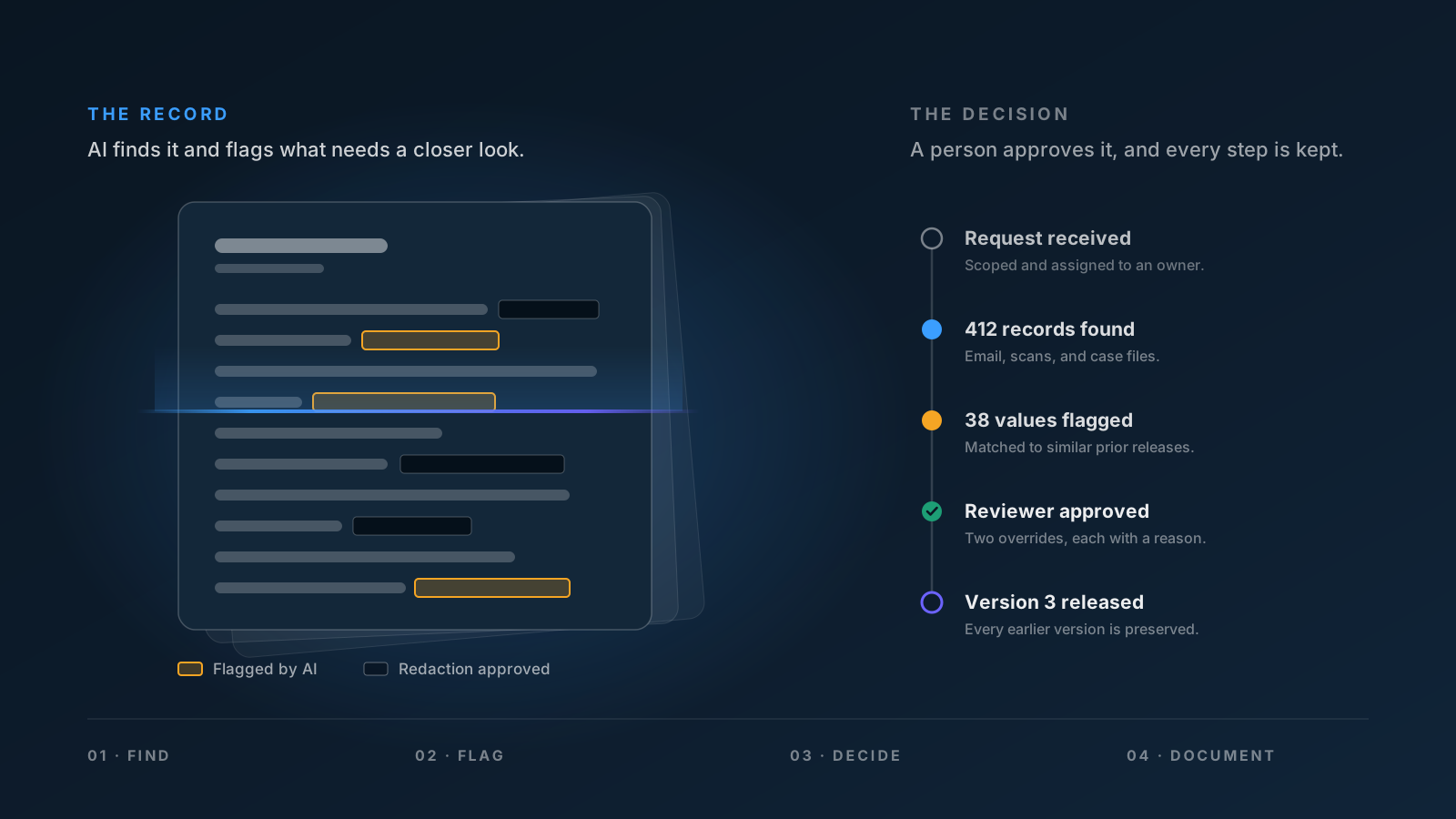
Requesters now use AI to search and compare released records at scale. Records teams can use AI too, to find records, flag sensitive data, and keep redactions consistent, while people stay accountable for every disclosure decision.
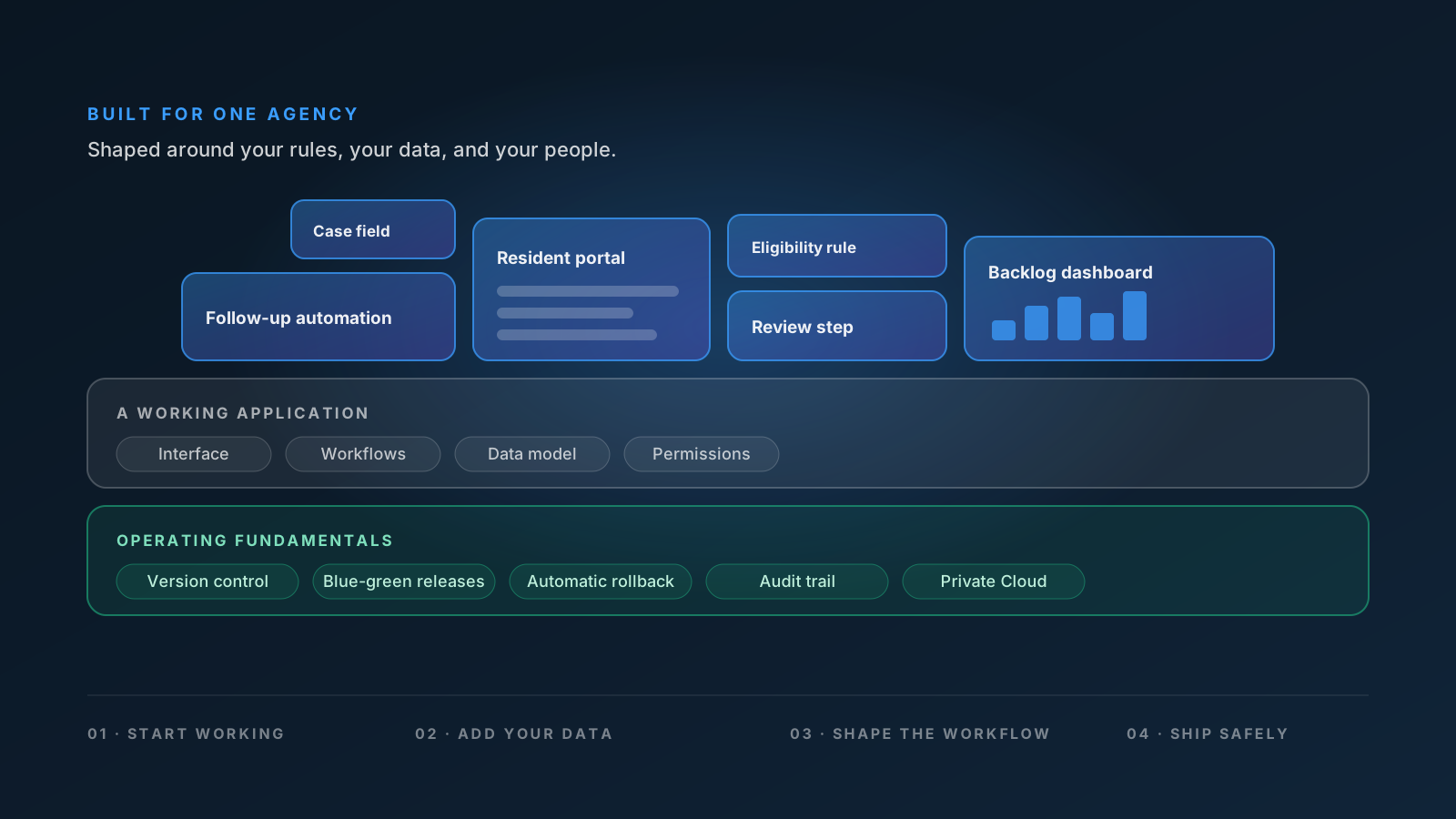
Agencies should not have to choose between software that almost fits and custom tools nobody can maintain. Start from a working application foundation, then shape it to your own data, workflows, rules, and users.
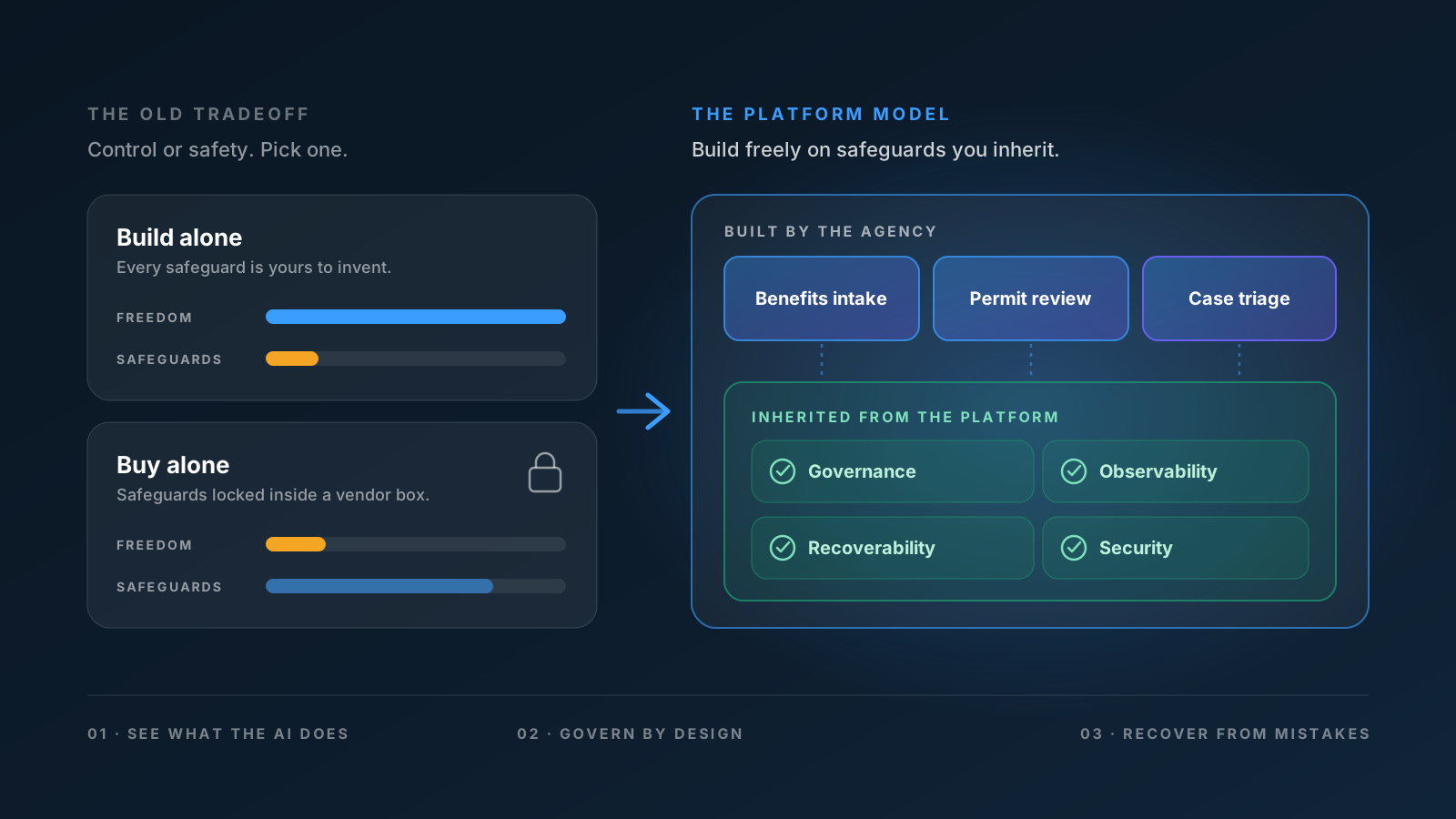
The old build-versus-buy debate assumed agencies had to trade control for safety. A platform model lets government build the applications its mission requires on top of inherited governance, observability, and recoverability.
How AI agents are designed, given memory and capabilities, and evaluated in production.
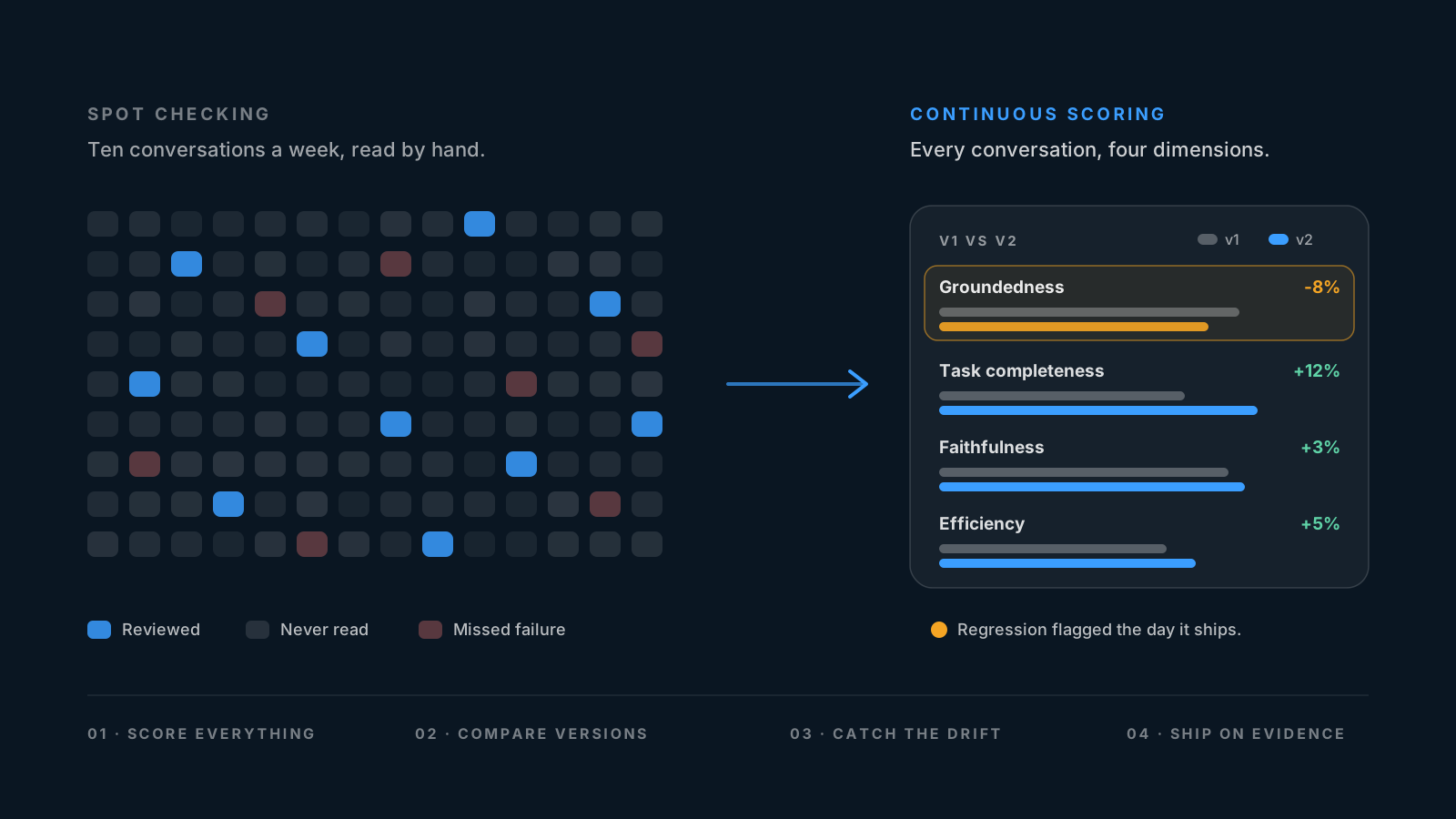
Why spot-checking fails, which four dimensions actually matter, and how continuous evaluation catches regressions before your users do.
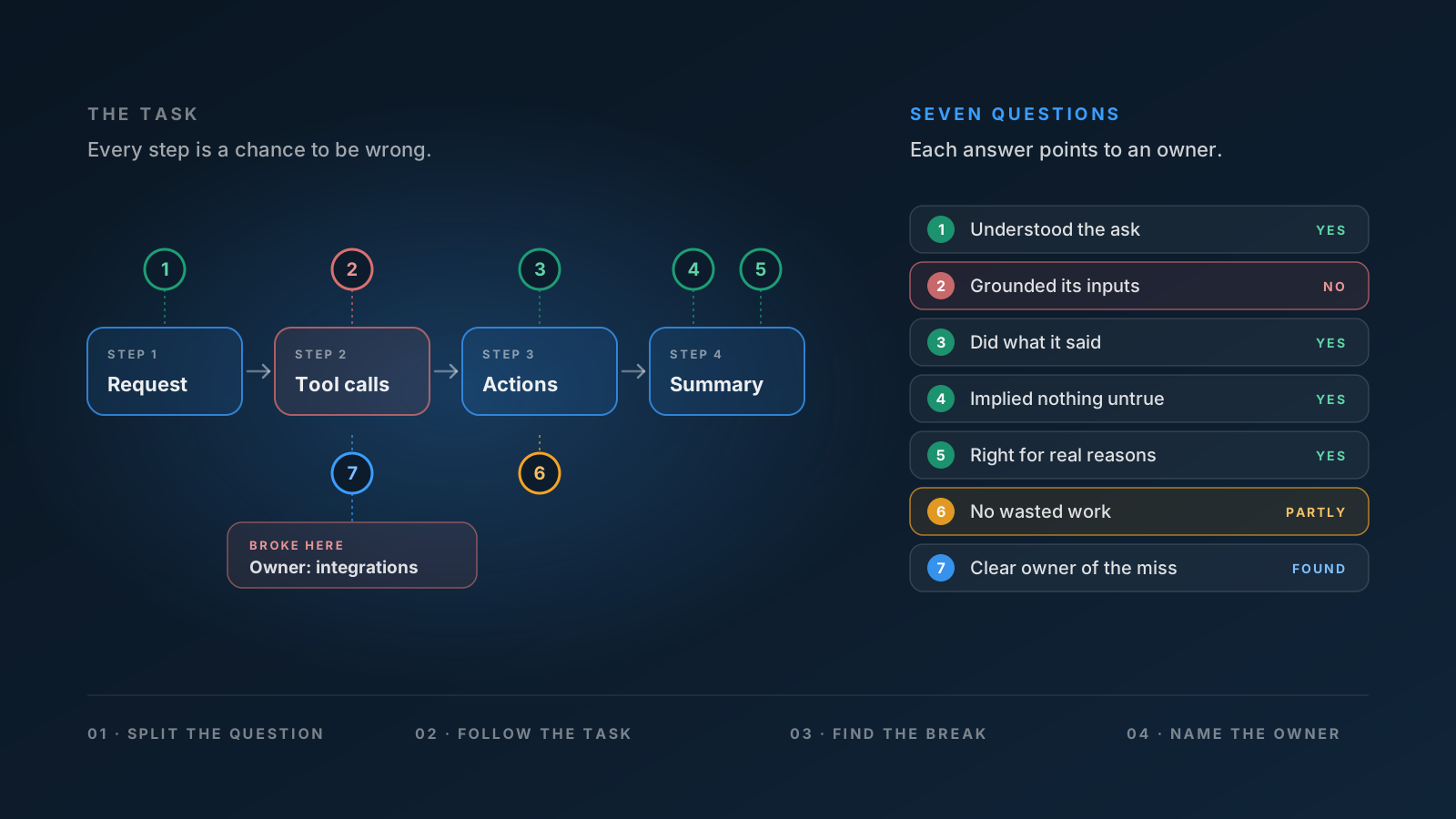
Evaluating an agent is not one hard problem. It is seven smaller ones, asked in the order the task actually happens, and each points to a specific owner when the answer is no.
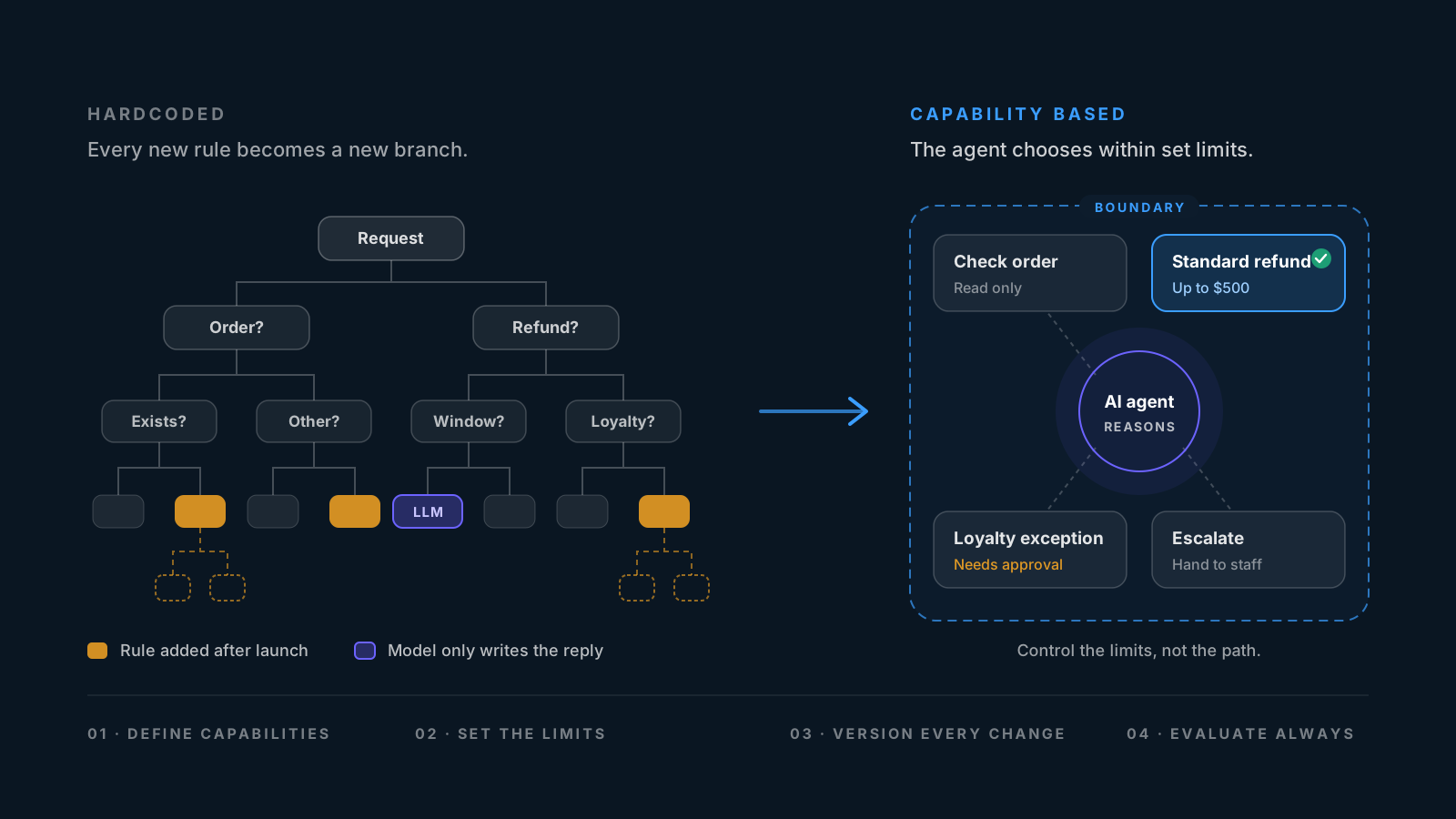
Most agent architectures devolve into decision trees with an LLM in the middle. Here's why, and what a capability-based alternative looks like.
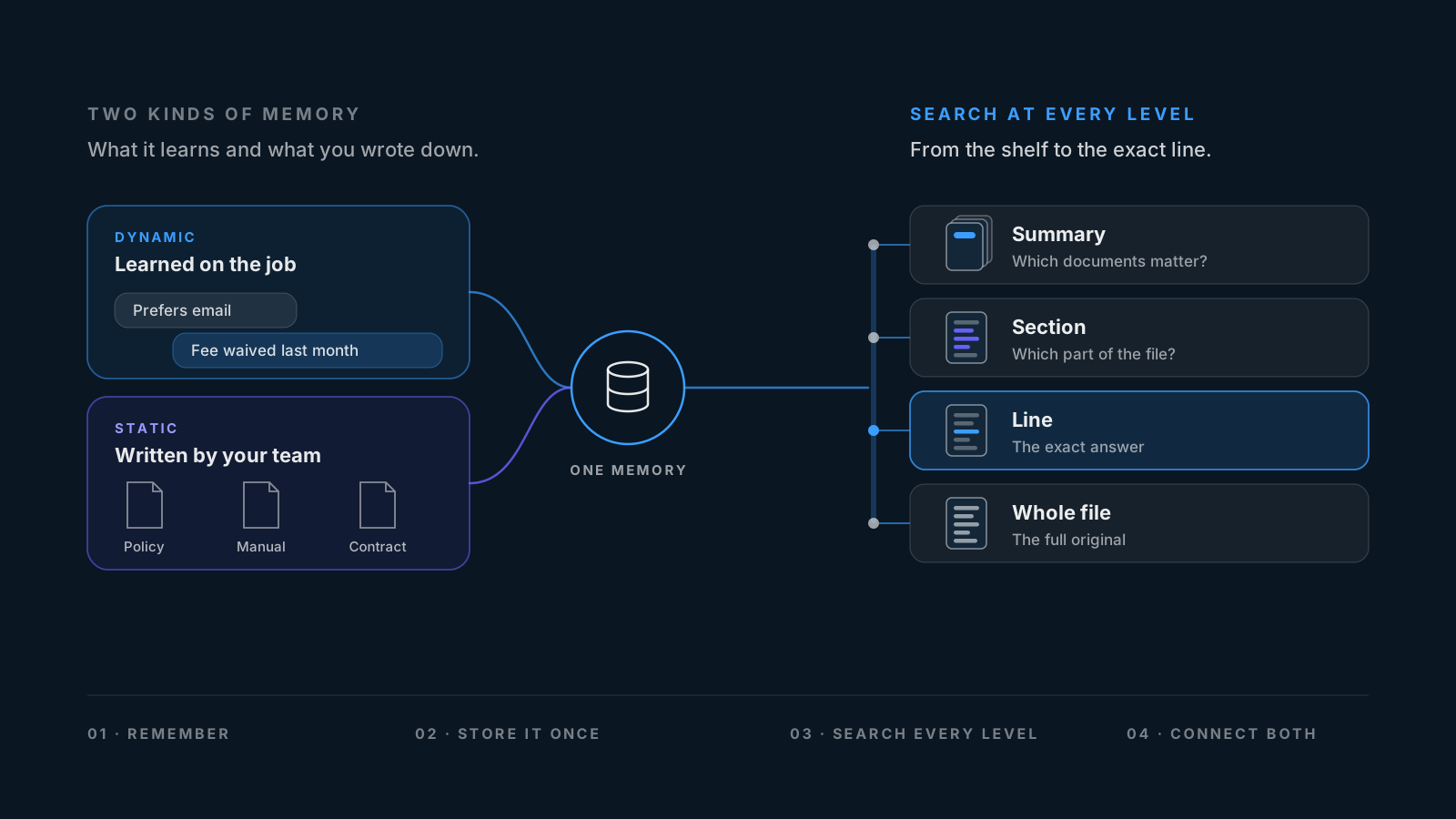
Most agent limitations are not model limitations. They are memory limitations. Here's what unified dynamic and static memory unlocks.
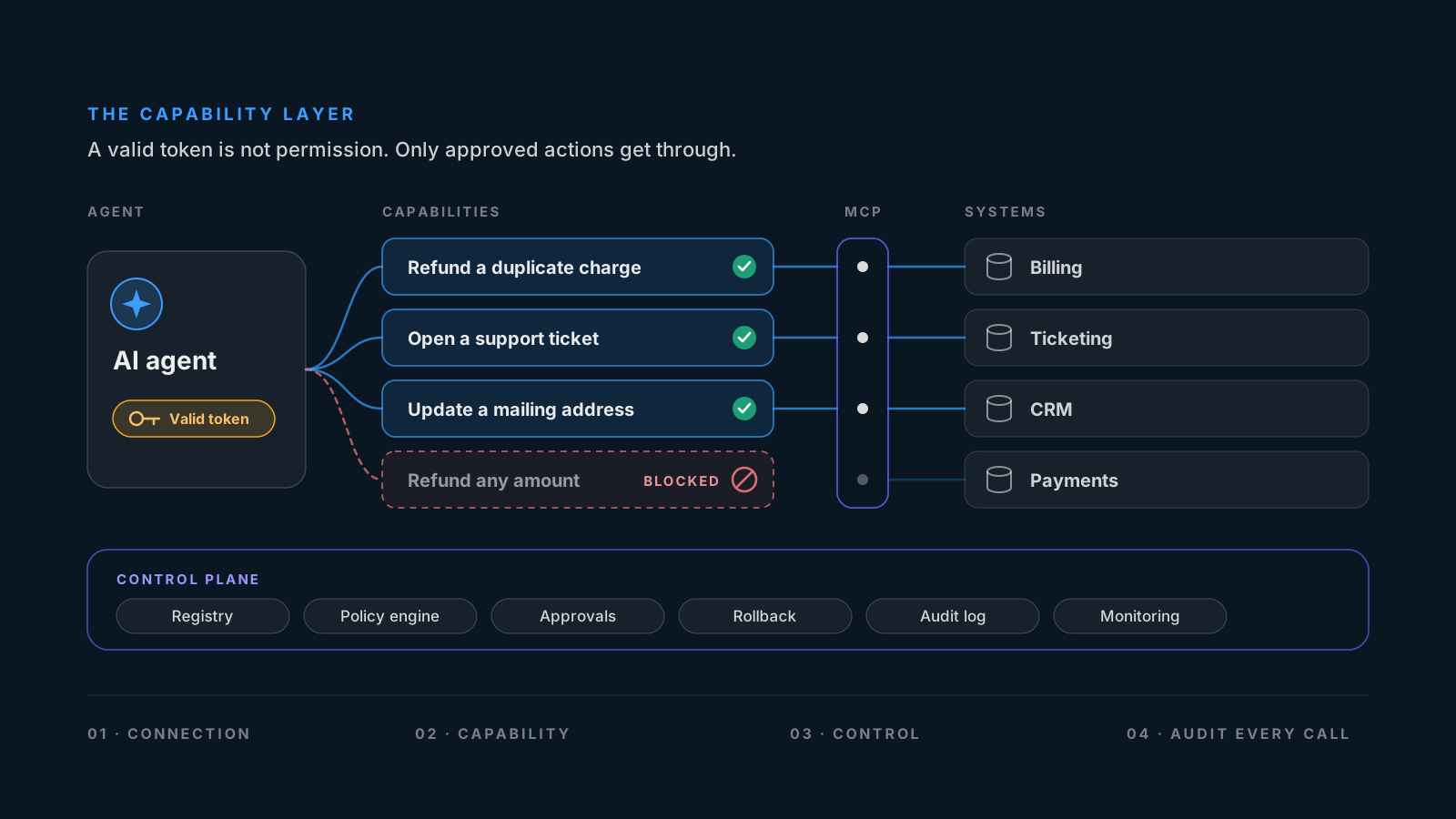
MCP solves the integration problem. It does not solve the authorization problem. Here is the three-layer architecture that makes AI agents safe to deploy at scale.
Keeping sensitive data safe across AI systems, from intake to testing.
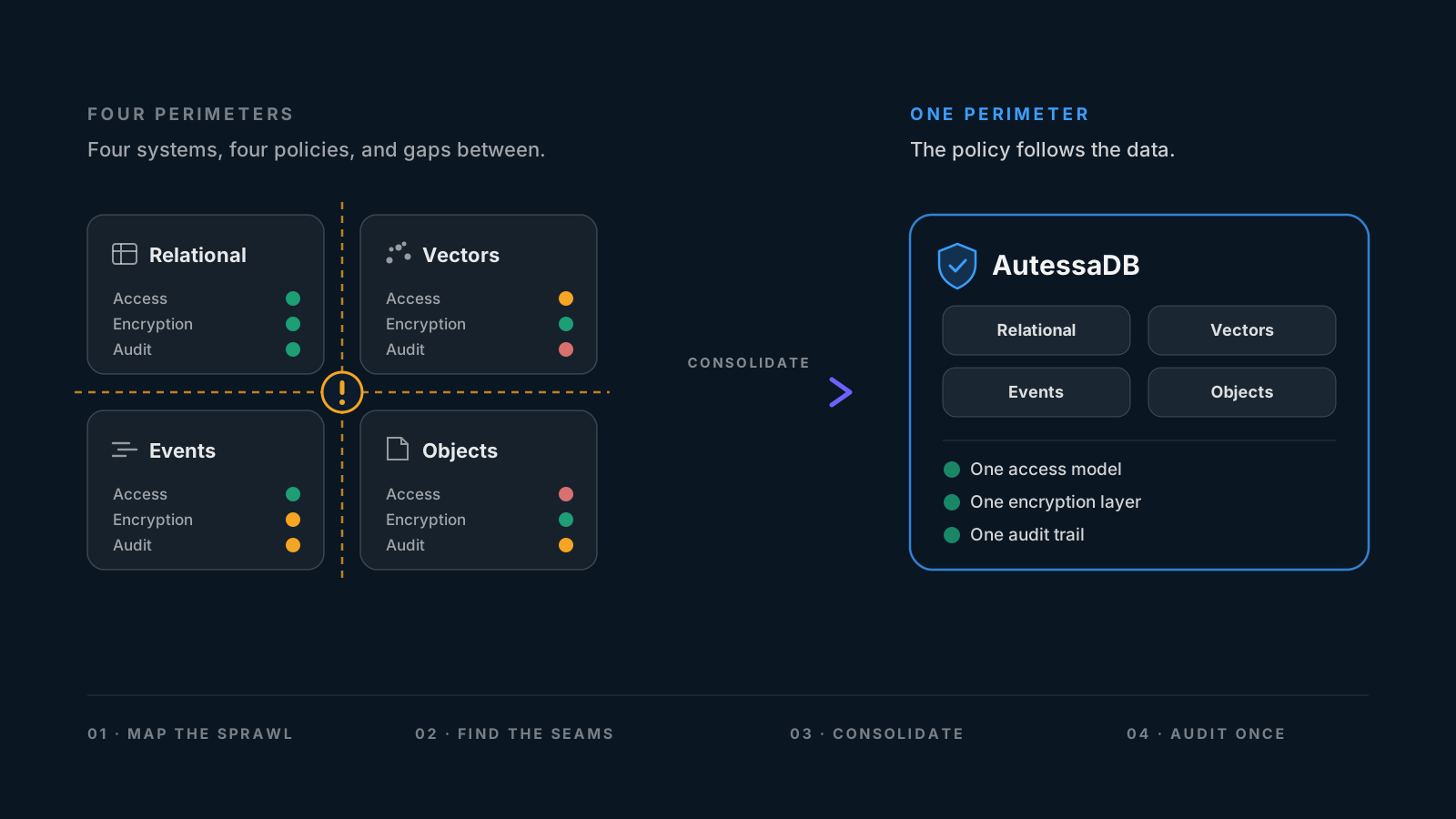
The real security risk in AI applications is not in any single system. It lives in the seams between four.
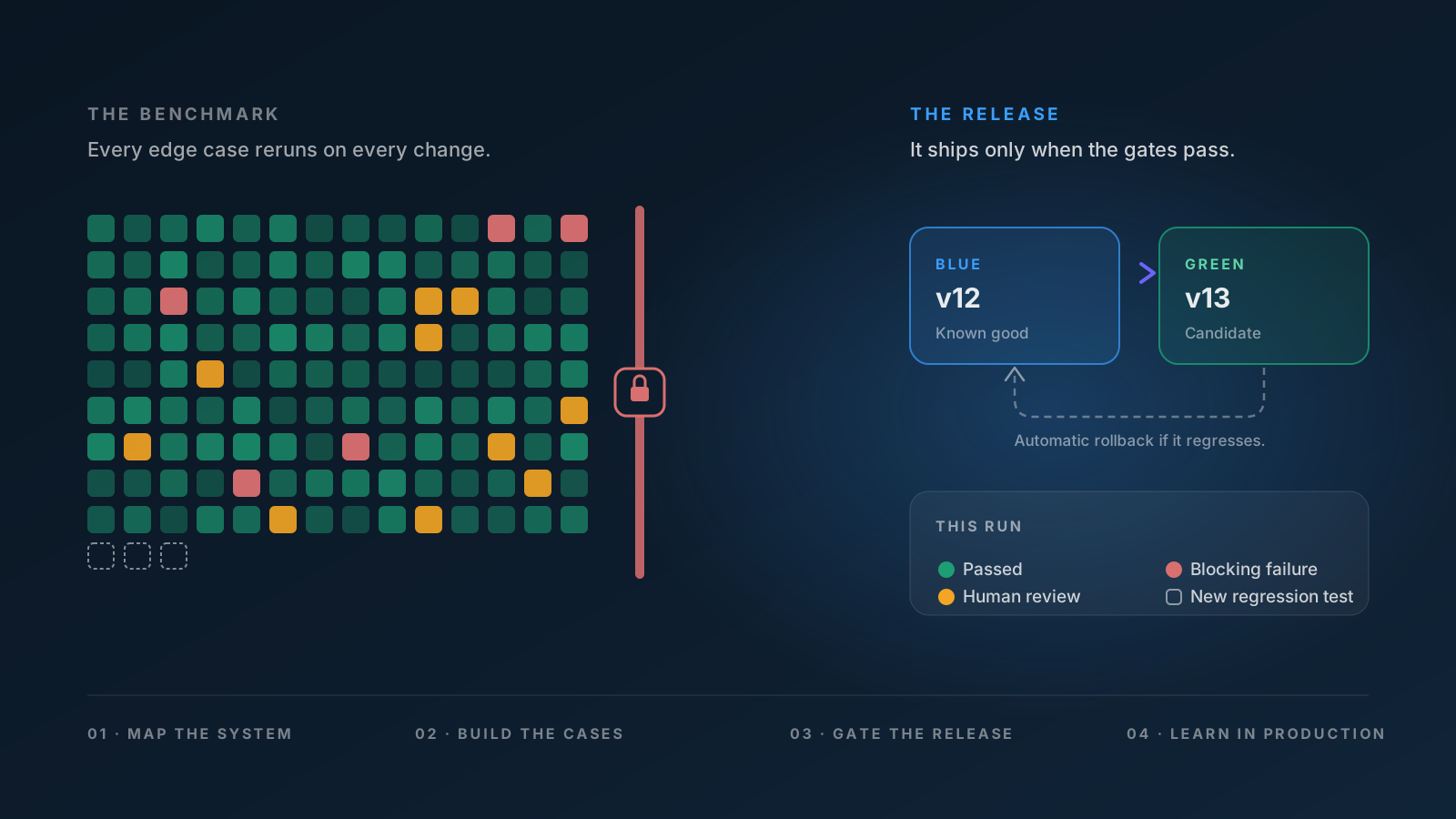
Text alone is not a reliable trust boundary. Build a use-case-specific benchmark, automate the checks with clear pass or fail criteria, send consequential cases to human review, and rerun it with every release.
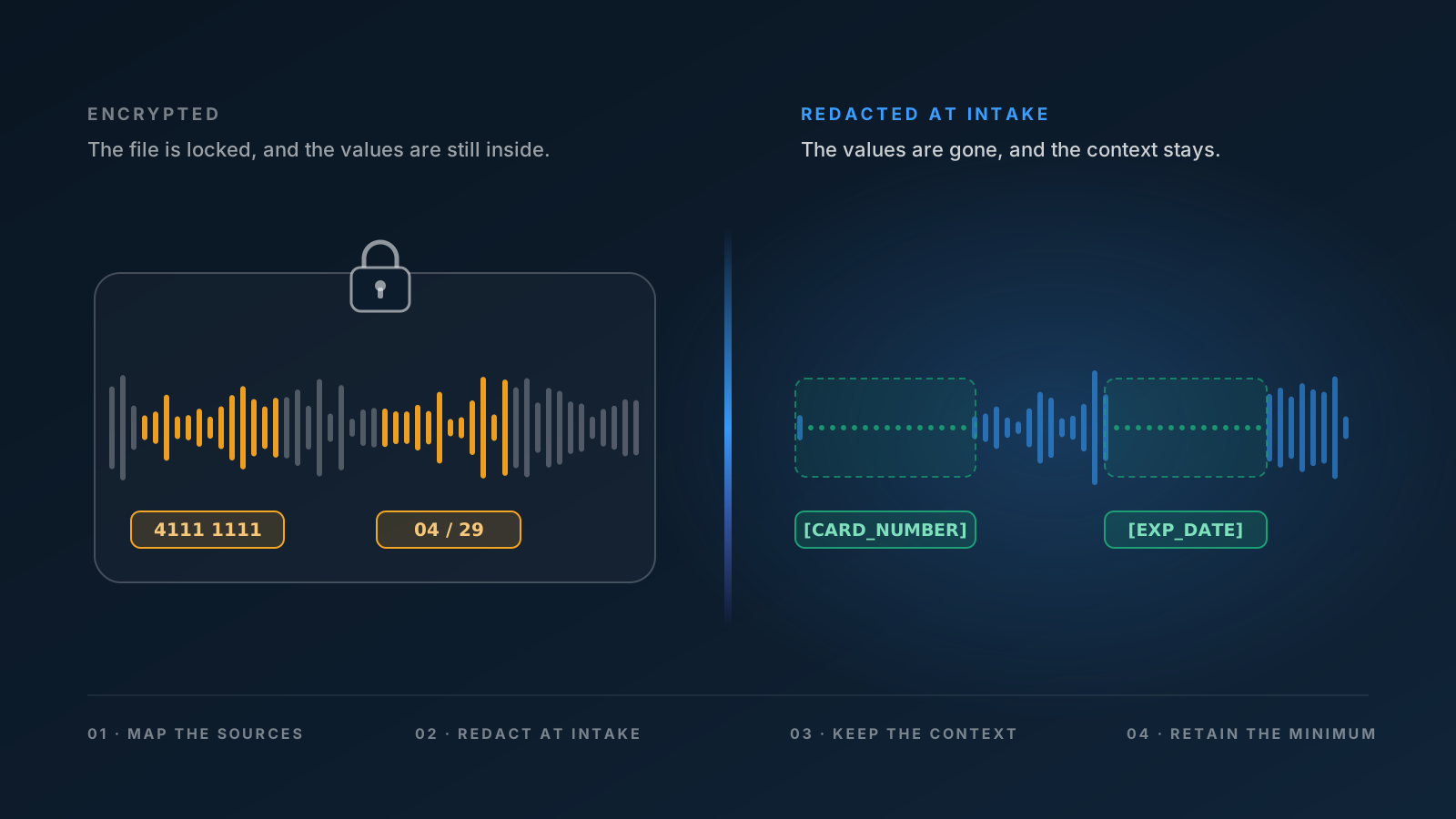
Encryption controls who can read sensitive data. Redaction decides whether you keep it at all. For AI evaluation, testing, and analytics, that difference turns raw calls and documents from a liability into a durable asset.
Internal tools, automation, interfaces, and the infrastructure underneath them.
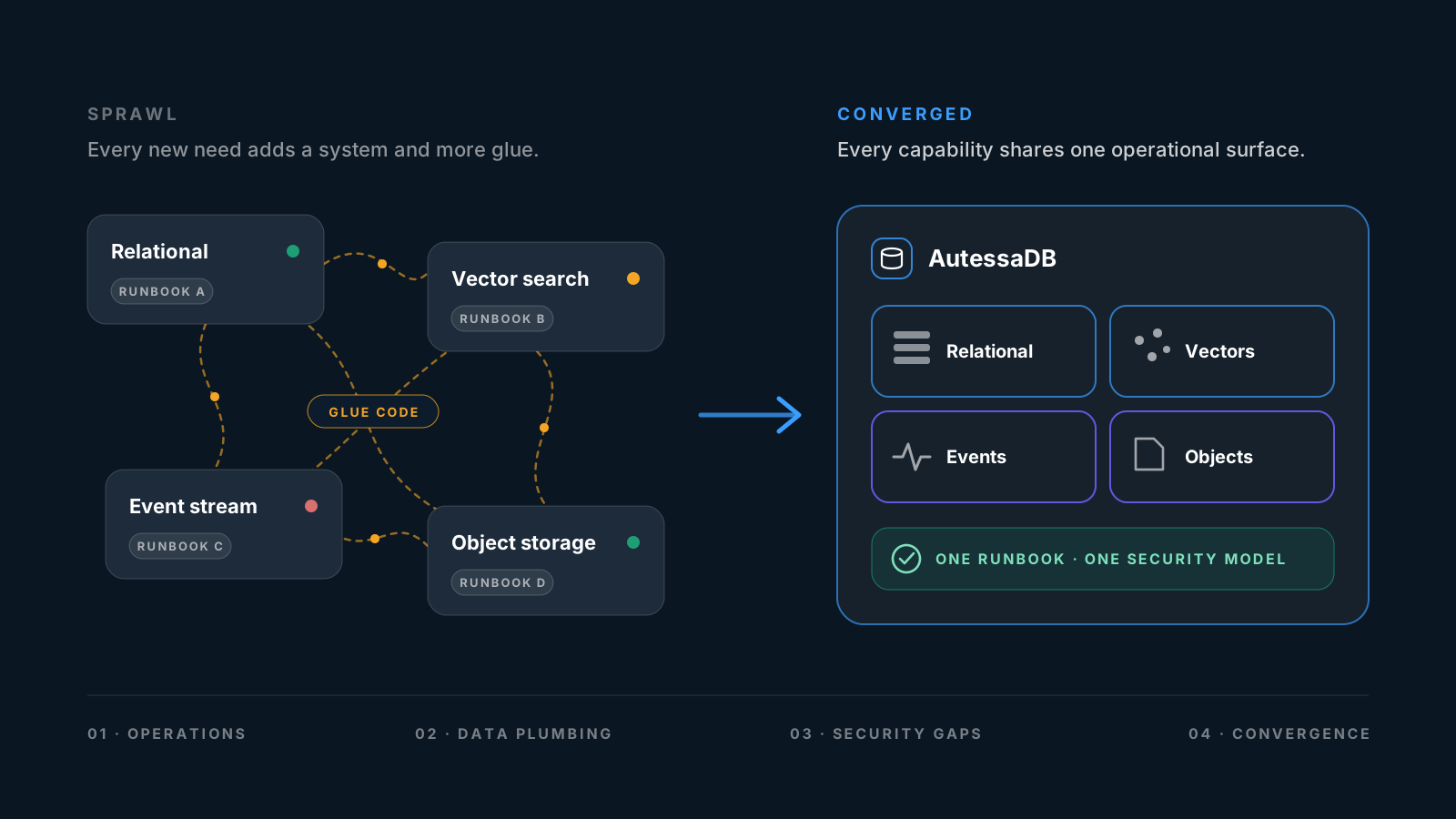
How AI infrastructure sprawl happens, what it actually costs, and why convergence beats consolidation.
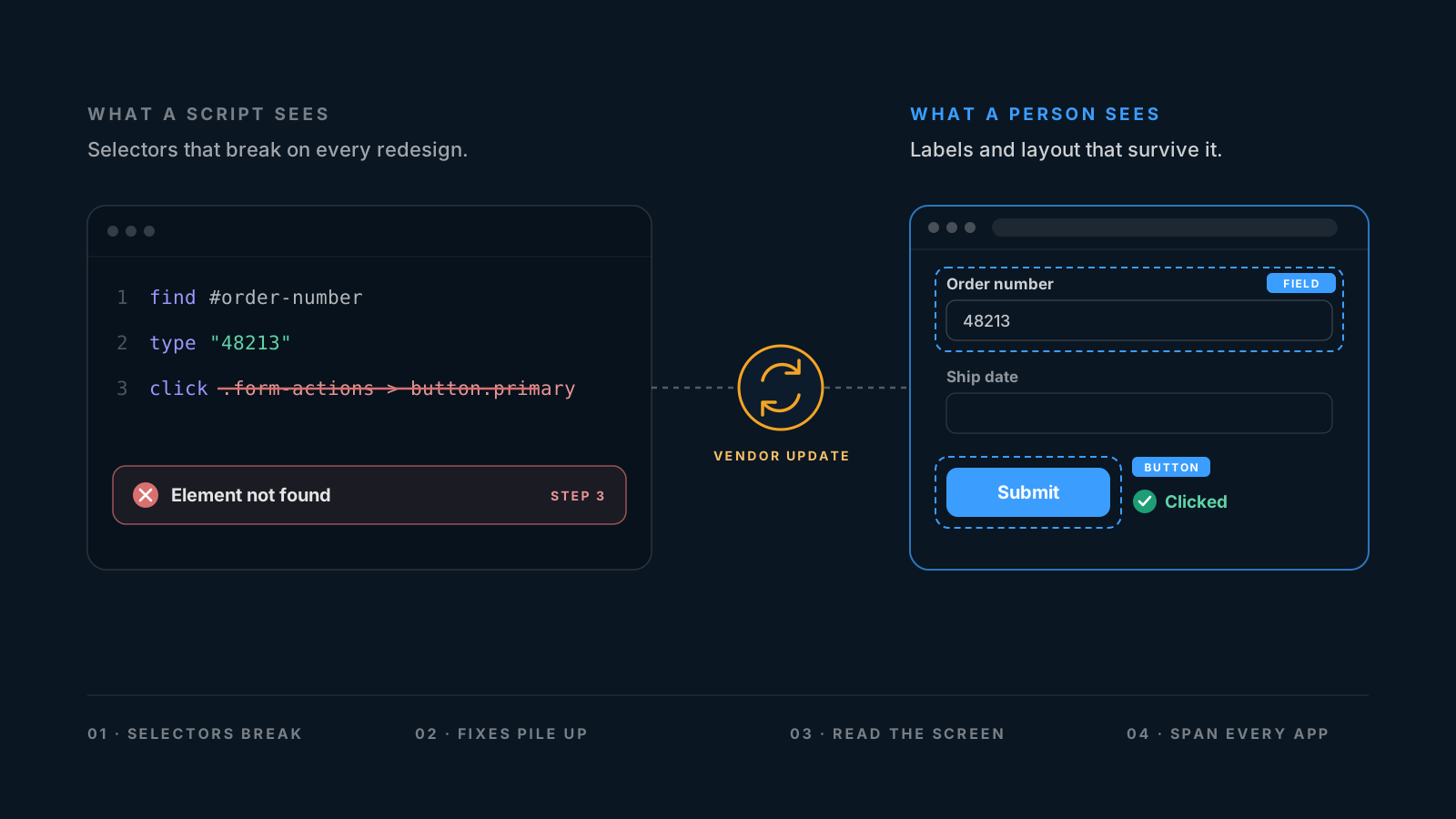
Traditional RPA sees the DOM. Humans see the screen. That gap is why your automations break every time a vendor ships a redesign.
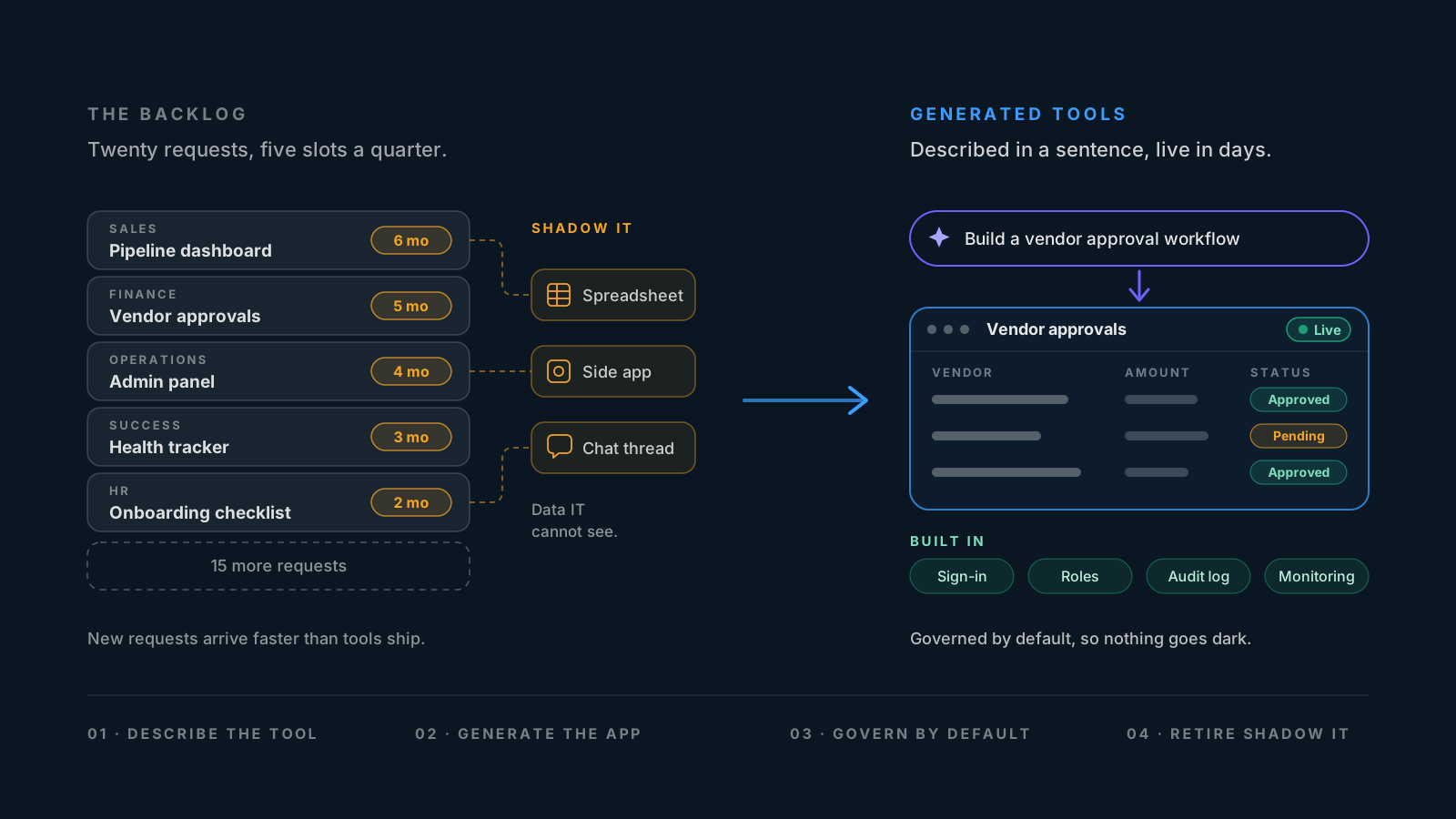
Engineering cannot keep up with internal tool demand. People build shadow IT to cope. AI-generated tooling changes the math.
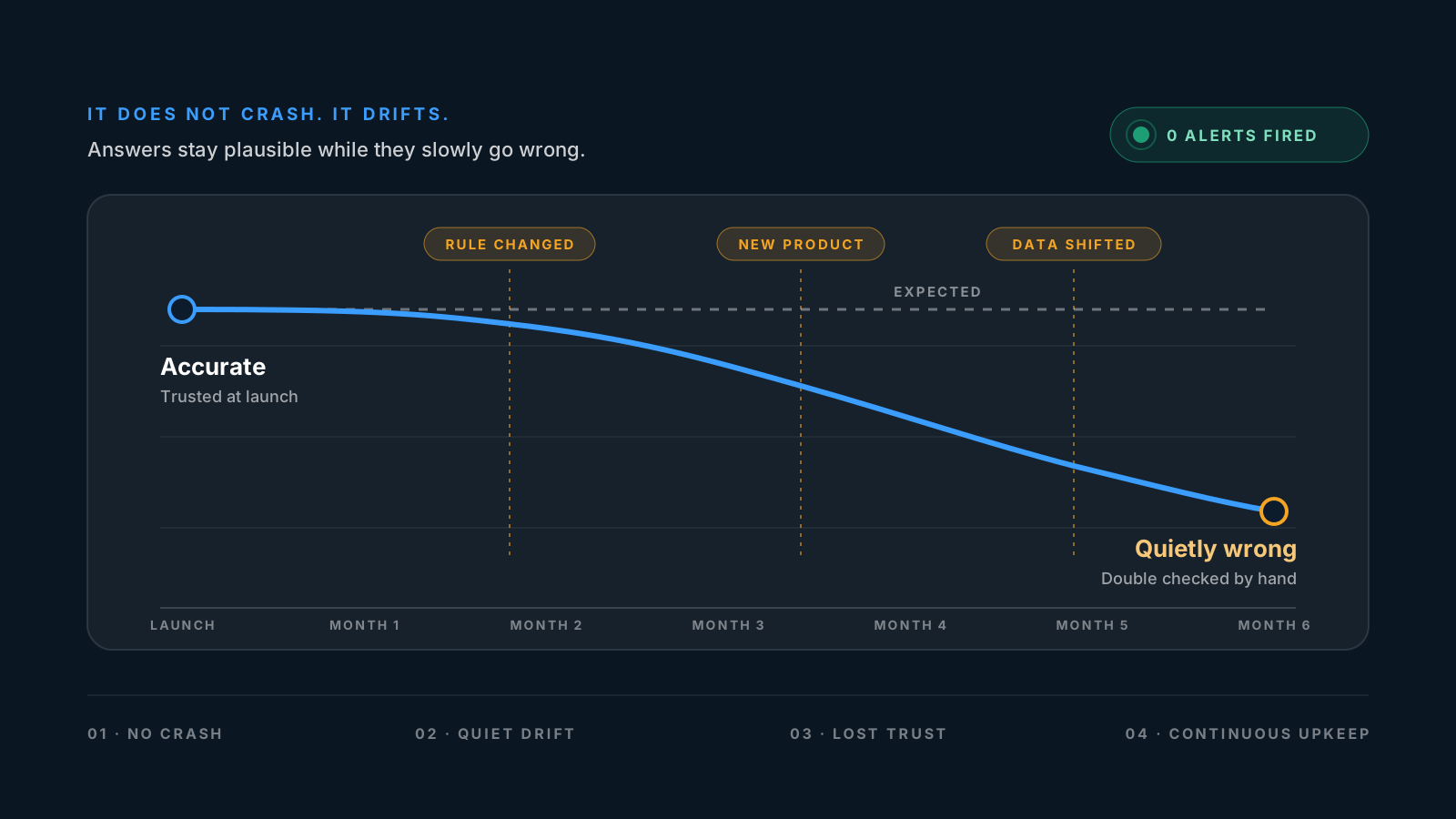
AI applications do not crash. They drift. Here's how gradual degradation erodes trust, and what it takes to keep AI tools aligned with a changing business.
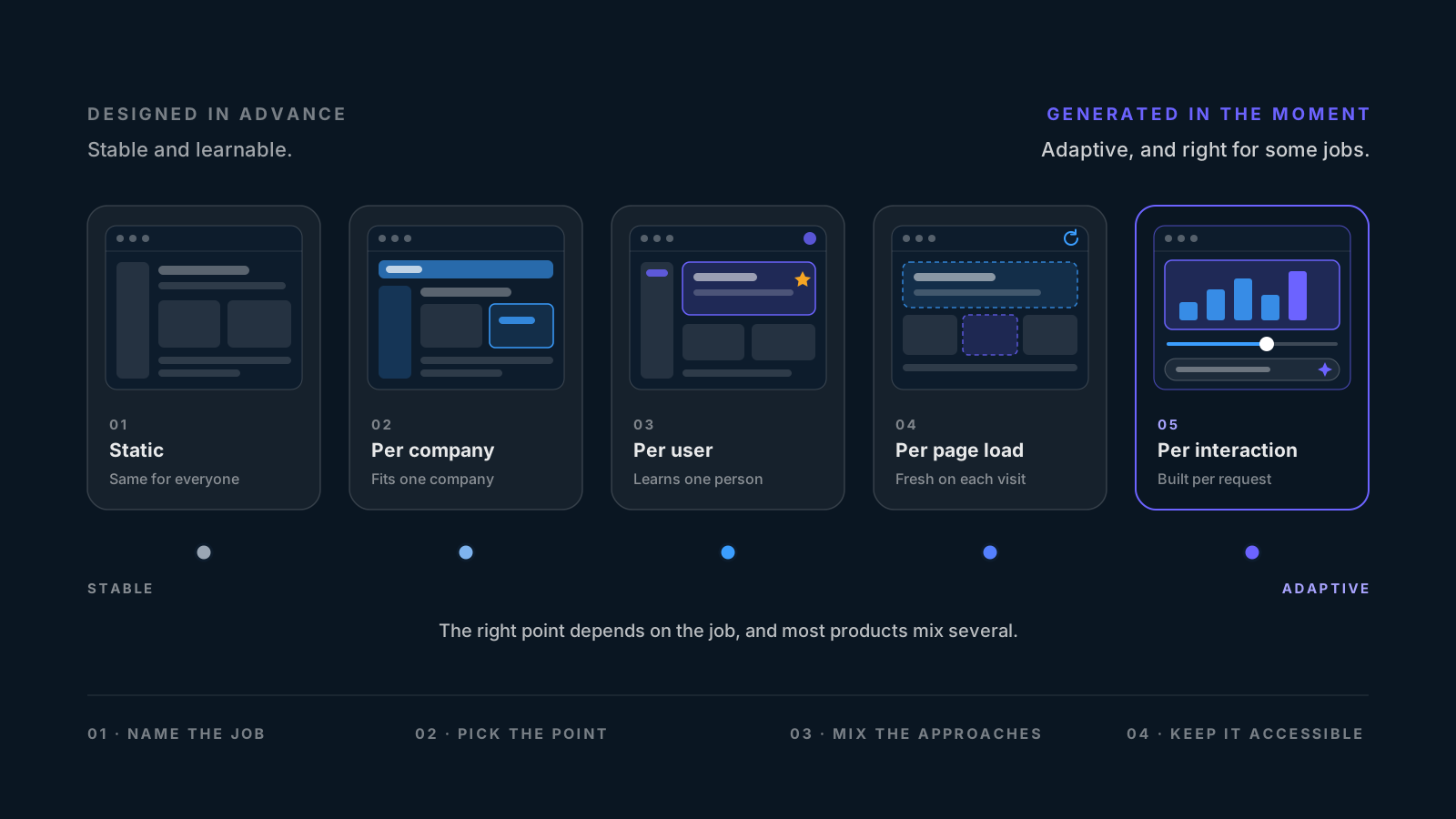
Generated, conversational UI is treated as the future of every interface. Four decades of HCI research say it is one of five options, each right for different jobs. Here is the map and the evidence.
How we think about software, and how we run Autessa on Autessa.
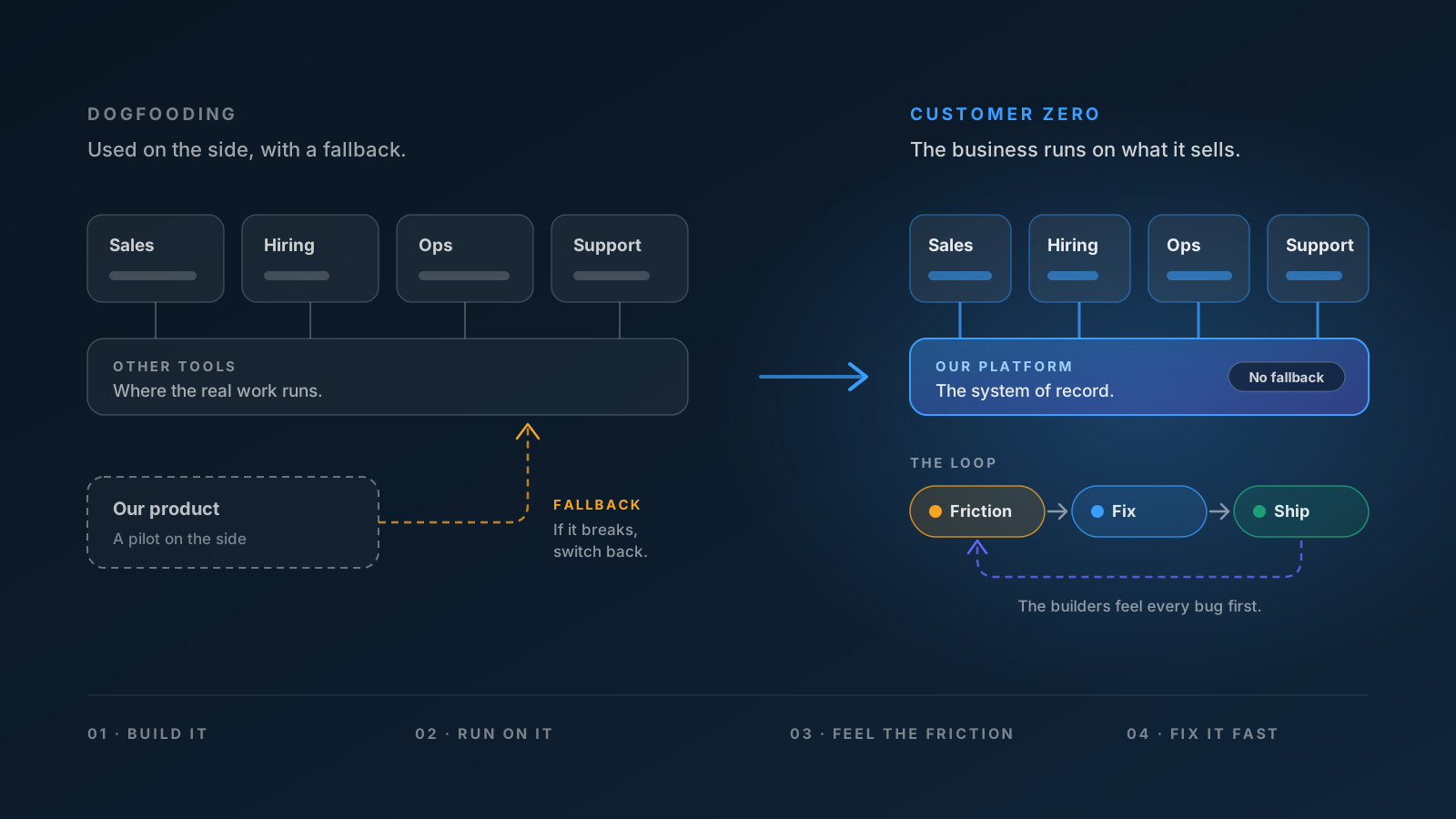
Customer zero means running your business on the product you sell — not as a test, but as the system of record. A look at where the idea came from and why it shapes the best platform companies.
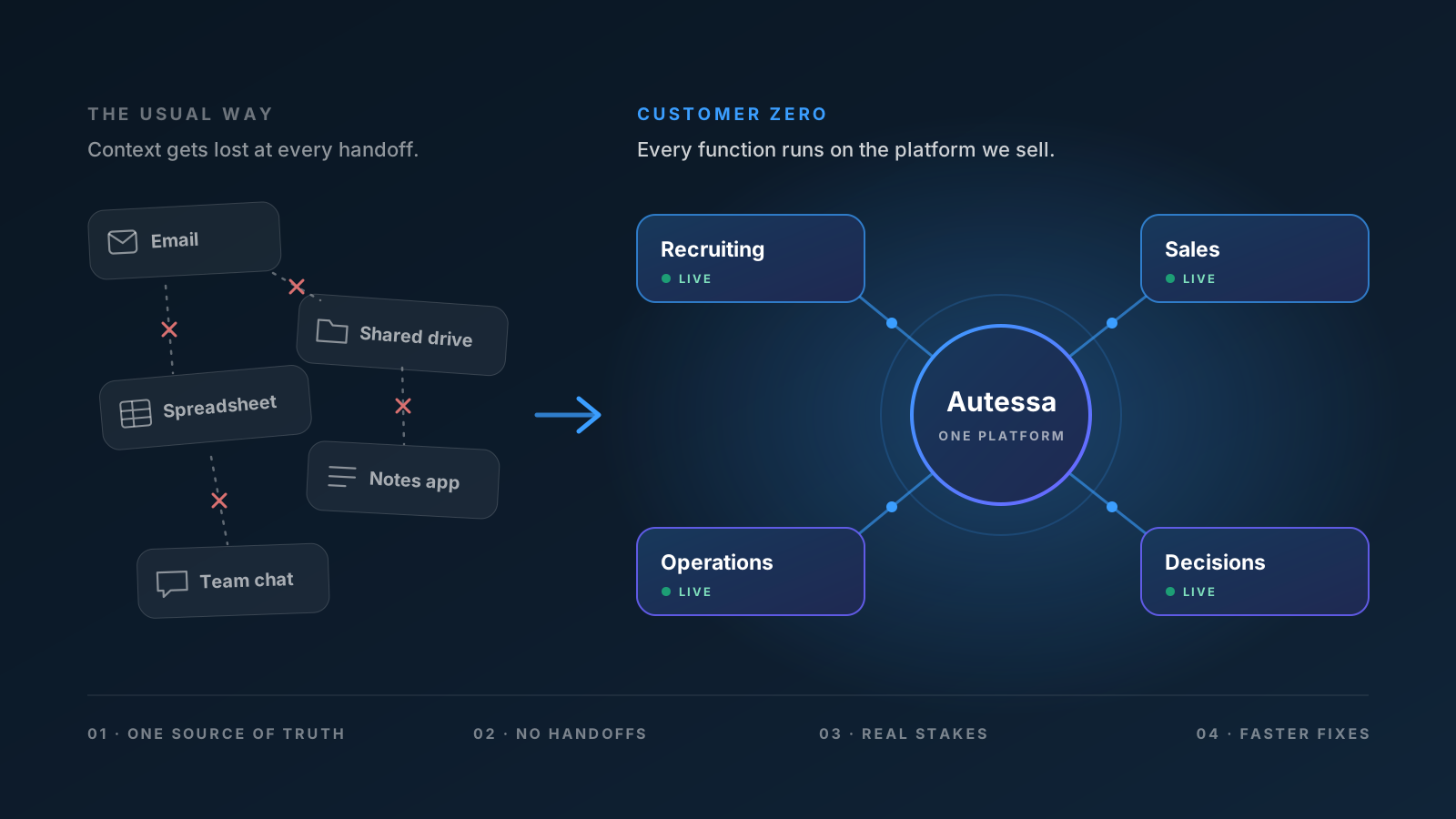
We are our own first customer. Every conversation, every candidate, every deal, and every decision runs on the same platform we sell — including the moments that commitment gets tested.
What AI changed, what it takes to run it responsibly in production, and how buying software works now that a system can be shaped to a business in days rather than quarters.